

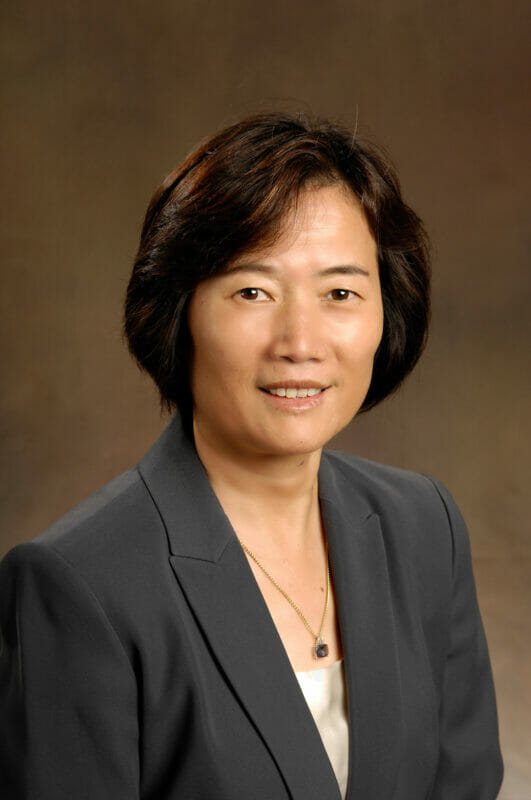
Xiaoning Bi, PhD, MD
Professor of Physiology, Daljit and Elaine Sarkaria Endowed Professor in Neuroscience
College of Osteopathic Medicine of the Pacific
Join year: 2006
Ph.D., Neurobiology, Neuroscience Program, University of Southern California, Los Angeles, CA, 1996
M.D., Neuroanatomy, Brain Research Institute, Zurich University, Switzerland, 1994
M.S., Neurophysiology, Third Military Medical University, P.R. China, 1986
M.D., Medicine, Binzhou Medical University, P.R. China, 1982
Postdoctoral Fellow, Dept. of Anatomy and Neurobiology, UCI, Irvine, CA, 1997-1998
Postdoctoral Fellow, Neuroscience, University of Southern California, Los Angeles, CA, 1996-1997
Professor, Department of Biomedical Sciences, COMP/Western University of Health Sciences, 2012-present
Associate Professor, Department of Biomedical Sciences, COMP/Western University of Health Sciences, 2006-2012
Assistant Professor In-Residence, Department of Psychiatry and Human Behavior, UCI, Irvine, CA, 2002-2005
Adjunct Assistant Professor, Anatomy and Neurobiology, UCI, Irvine, CA, 1998-2001
Endocrine System; Physiology (COMP)
Gastrointestinal system; Physiology (COMP)
Molecular and Cellular Basis of Life (GCBS)
Molecular and Cellular Basis of Medicine (COMP)
Neuroscience System; Physiology (COMP)
Research in my laboratory seeks to understand how neurons develop, mature, and function properly and how they die when challenged by natural aging process, by intrinsic genetic defects, or by various insults. We hope that by understanding the basic molecular and cellular mechanisms that govern these processes we can develop better preventive and therapeutic strategies for central nervous system disorders in children as well as in elders.
Current Research Projects:
1. Signaling pathways in learning and memory and other brain functions.
Signal transmission at junctions between neurons, the synapses, is regulated by multiple signaling pathways. One of my lab projects for the last few years has focused on the mTOR (mechanistic/mammalian target of rapamycin) signaling pathway. The mTOR network consists of two complexes mTORC1 and mTORC2 and integrates signals from nutrients, energy levels, growth factors, and stress status. We have recently found that mTORC1 activity is increased while mTORC2 activity is decreased in a mouse model of Angelman syndrome (AS), a disease caused by maternal UBE3A deficiency. Furthermore, the imbalanced mTORC1 and mTORC2 activity is causally related to learning and memory impairment and motor dysfunction in AS mice. These results suggest that mTOR signaling is regulated by UCE3A. Since abnormal mTOR signaling has been reported in other neurological disorders, including Alzheimer's disease and autism spectrum disorders, our findings may have broad implications.
2. Regulation of potassium channels by UBE3A.
Small conductance calcium-activated potassium channels (SK1-3) are widely distributed throughout the brain and other organs. SK2 channels play important roles in learning and memory and in abnormal brain functions, such as seizures. We have demonstated that synaptic SK2 levels are regulated by UBE3A and the lack of this regulation resulting from UBE3A deletion contributes to learning impairment in Angelman sydrome mice. Since SK2 channels are widely expressed in mammalian brain, these findings have significant implications for a vast array of neurologic/neuropsychiatric disorders.
Recent Publications:
- Penna E, Pizzella A, Abate N, Conte N, Cimmino F, Mollica MP, Di Giaimo R, Baudry M, Bi X, Crispino M. (2026) The serotonin receptor 7 as an emerging target to restore altered neuroplasticity in Angelman syndrome. Exp Neurol. 2026 Jun;400:115689. doi: 10.1016/j.expneurol.2026.115689. Epub 2026 Feb 11. PMID: 41687803.
- Penna E, Su W, Reece T, Braga M, Shigemitsu H, Ta K, Baudry M, Bi X. (2026) Extracellular vesicle dysfunction contributes to synaptic and cognitive deficits in a mouse model of Angelman syndrome. Prog Neurobiol. 2026 Feb;257:102870. doi: 10.1016/j.pneurobio.2025.102870. Epub 2025 Dec 15. PMID: 41407260.
- Yoon S, Sasaninia K, Era IH, Dhama S, Mohan AS, Patel A, Nguyen L, Karapetyan A, Sy C, Yedgarian N, Newman N, Bi X, Baudry M, Yang PR, Venketaraman V. Fullerene Gallium (2025) Phosphonate Shows Antimycobacterial Effect AgainstMycobacterium avium. Int J Mol Sci. 2025 Oct 14;26(20):9998. doi: 10.3390/ijms26209998. PMID: 41155292; PMCID: PMC12563641.
- Baudry M, Bi X. (2025) Calpain-1 and Calpain-2 in the Brain: What Have We Learned from 45 Years of Research? Cells. 2025 Aug 22;14(17):1301. doi: 10.3390/cells14171301. PMID: 40940713; PMCID: PMC12427732.
- Sun H, Huo X, Bi X, Cao D, Yang J, Shen K, Peng P. (2025) Exosome transmit the ability of migration and invasion in heterogeneous ovarian cancer cells by regulating autophagy via targeting hsa-miR-328. Gynecol Oncol. 2025 Mar;194:60-70. doi: 10.1016/j.ygyno.2025.02.011. Epub 2025 Feb 18. PMID: 39970632.
- Sun J, Lin W, Hao X, Baudry M, Bi X. (2024) LAMTOR1 regulates dendritic lysosomal positioning in hippocampal neurons through TRPML1 inhibition. Front Cell Neurosci. 2024 Nov 22;18:1495546. doi: 10.3389/fncel.2024.1495546. PMID: 39650798; PMCID: PMC11621854.
- Wang W, Bi X, Feng Y, Ming X, Saina G, Kun W, Ling B, Yu H. (2024) Efficacy and Safety of Immune Checkpoint Inhibitors on Advanced Cervical Cancer: A Systematic Review and Meta-analysis. J Immunother. 2025 Feb-Mar 01;48(2):78-88. doi: 10.1097/CJI.0000000000000545. Epub 2024 Dec 5. PMID: 39635970.
- Pizzella A, Penna E, Liu Y, Abate N, Lacivita E, Leopoldo M, Perrone-Capano C, Crispino M, Baudry M, Bi X. (2024) Alterations of synaptic plasticity in Angelman syndrome model mice are rescued by 5-HT7R stimulation. Prog Neurobiol. 2024 Nov;242:102684. doi: 10.1016/j.pneurobio.2024.102684. Epub 2024 Oct 29. PMID: 39481590.
- Baudry M, Wang Y, Bi X, Luo YL, Wang Z, Kamal Z, Shirokov A, Sullivan E, Lagasca D, Khalil H, Lee G, Fosnaugh K, Bey P, Mehdi S, Coulter G. (2024) Identification and neuroprotective properties of NA-184, a calpain-2 inhibitor. Pharmacol Res Perspect. 2024 Apr;12(2):e1181. doi: 10.1002/prp2.1181. PMID: 38429943; PMCID: PMC10907882.
- Baudry M, Bi X. (2024) Revisiting the calpain hypothesis of learning and memory 40 years later. Front Mol Neurosci. 2024 Feb 1;17:1337850. doi: 10.3389/fnmol.2024.1337850. PMID: 38361744; PMCID: PMC10867166.
- Su W, Liu Y, Lam A, Hao X, Baudry M, Bi X. (2023) Contextual fear memory impairment in Angelman syndrome model mice is associated with altered transcriptional responses. Sci Rep. 2023 Oct 30;13(1):18647. doi: 10.1038/s41598-023-45769-x. PMID: 37903805; PMCID: PMC10616231.
- Baudry M, Luo YL, Bi X. (2023) Calpain-2 Inhibitors as Therapy for Traumatic Brain Injury. Neurotherapeutics. 2023 Oct;20(6):1592-1602. doi: 10.1007/s13311-023-01407-y. Epub 2023 Jul 20. PMID: 37474874; PMCID: PMC10684478.
- Hao X, Sun J, Zhong L, Baudry M, Bi X. (2023) UBE3A deficiency-induced autophagy is associated with activation of AMPK-ULK1 and p53 pathways. Exp Neurol. 2023 May;363:114358. doi: 10.1016/j.expneurol.2023.114358. Epub 2023 Feb 26. PMID: 36849003; PMCID: PMC10073344.
- Yuan M, Chen H, Chen D, Wan D, Luo F, Zhang C, Nan Y, Bi X, Liang J. (2022) Effect of physical activity on prevention of postpartum depression: A dose-response meta-analysis of 186,412 women. Front Psychiatry. 2022 Nov 4;13:984677. doi: 10.3389/fpsyt.2022.984677. PMID: 36405921; PMCID: PMC9672674.
- Sun J, Liu Y, Hao X, Baudry M, Bi X. (2022) Lack of UBE3A-Mediated Regulation of Synaptic SK2 Channels Contributes to Learning and Memory Impairment in the Female Mouse Model of Angelman Syndrome. Neural Plast. 2022 Oct 4;2022:3923384. doi: 10.1155/2022/3923384. PMID: 36237484; PMCID: PMC9553421.
- Sun J, Liu Y, Hao X, Lin W, Su W, Chiang E, Baudry M, Bi X. (2022) LAMTOR1 inhibition of TRPML1-dependent lysosomal calcium release regulates dendritic lysosome trafficking and hippocampal neuronal function. EMBO J. 2022 Mar 1;41(5):e108119. doi: 10.15252/embj.2021108119. Epub 2022 Jan 31. PMID: 35099830; PMCID: PMC8886530.
- Wang Y, Brazdzionis J, Dong F, Patchana T, Ghanchi H, Podkovik S, Wiginton JG 4th, Marino M, Duong J, Wacker M, Miulli DE, Neeki M, Bi X, Baudry M. (2021) P13BP, a Calpain-2-Mediated Breakdown Product of PTPN13, Is a Novel Blood Biomarker for Traumatic Brain Injury. J Neurotrauma. 2021 Nov 15;38(22):3077-3085. doi: 10.1089/neu.2021.0229. Epub 2021 Oct 6. PMID: 34498916.
- Baudry M, Su W, Seinfeld J, Sun J, Bi X. (2021) Role of Calpain-1 in Neurogenesis. Front Mol Biosci. 2021 Jun 15;8:685938. doi: 10.3389/fmolb.2021.685938. PMID: 34212005; PMCID: PMC8239220.